How to Remove Salt from Borehole and Well Water: A Treatment Decision Guide
For a commercial site with salty borehole or well water, brackish-water reverse osmosis (BWRO) is often the process to evaluate for dissolved-salt removal. First test the water, then specify the quality and daily quantity needed at each use point.
Get an Equipment Quote ↗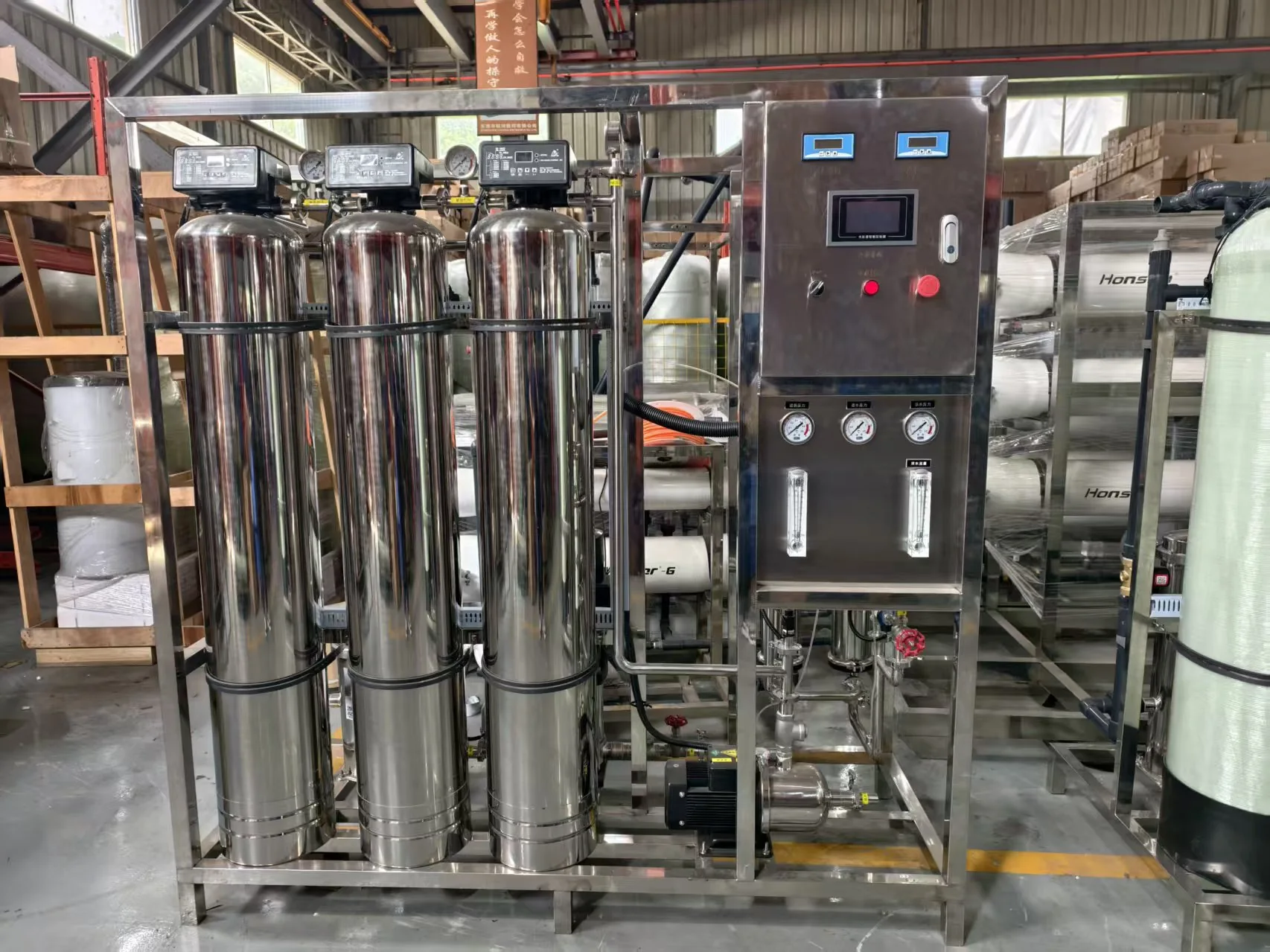
How to Remove Salt from Borehole and Well Water: A Treatment Decision Guide
For a commercial site with salty borehole or well water, brackish-water reverse osmosis (BWRO) is often the process to evaluate for dissolved-salt removal. First test the water, then specify the quality and daily quantity needed at each use point. The required RO output depends on operating hours, while the well and pretreatment must supply more water than the RO produces because a concentrate stream is discharged. Final membrane type, recovery, pretreatment and product-water quality need a project-specific design based on the complete water analysis.
On this page
- Why is borehole or well water salty?
- What must the borehole water become after treatment?
- Which water-analysis results are needed before selecting BWRO?
- Can a filter or water softener remove salt from a well?
- How large should a brackish-well RO system be?
- How much treated-water storage does the project need?
- Which pretreatment stages should be specified before BWRO?
- Why is the highest possible RO recovery not always the right choice?
- What should a BWRO equipment quotation include?
- Frequently asked questions about salty well-water RO
This guide follows that decision from the water report through process selection, flow sizing, concentrate management and a request for quotation. It is for EPC teams, plant engineers and buyers serving communities, resorts and industrial sites. It does not turn a nominal flow rating into a guarantee for a particular well.
Why is borehole or well water salty?
Possible causes include a naturally saline aquifer, seawater intrusion, saline water drawn in as pumping changes groundwater levels, or a particular dissolved ion problem. A salty taste alone does not identify which mechanism is present. Compare laboratory results with the well location, pumping history and any previous analyses. The US EPA's well-testing guidance lists sodium, chloride and total dissolved solids (TDS) among tests relevant to salty taste or possible seawater influence.
| Finding in the water report | Selection consequence |
|---|---|
| High TDS with sodium and chloride | Assess RO desalination and how the concentrate can be managed. |
| Hardness, alkalinity, sulfate or silica alongside salinity | Check scale risk and pretreatment before choosing recovery. |
| Iron or manganese, especially with variable oxygen exposure | Check whether oxidation and filtration are needed upstream of RO. |
| Turbidity or particles | Size particle removal and cartridge protection from actual loading. |
| A single regulated contaminant with otherwise acceptable TDS | Assess a targeted process instead of assuming whole-stream desalination. |
A single sample is a starting point. Ask for historical or seasonal analyses when the source changes with pumping, rainfall or the dry season. Confirm where the sample was taken: untreated well water, a storage tank and an existing treatment outlet are different design inputs. The well-water testing checklist gives buyers a fuller sampling sequence.
What must the borehole water become after treatment?
Specify the final use before setting a product-water target. Drinking water, food preparation, irrigation, boiler makeup and industrial process water have different quality and hygiene requirements. A reported TDS target alone may omit microbiology, hardness, silica, specific ions or the condition of the storage and distribution system.
For drinking-water projects, use the applicable destination-country requirements and a complete water-safety approach. RO removes a dissolved-salt load, but potable supply may also need conditioning, disinfection, protected storage and verification at the point of use. The WHO drinking-water guidelines provide a risk-management framework; they do not replace local rules. For boiler duty, use the boiler manufacturer's feed-water specification and the boiler feed-water guide. For highly purified uses, the single-pass versus double-pass RO guide explains why a second pass may be considered.
Which water-analysis results are needed before selecting BWRO?
Send the laboratory report, sampling date, well location and design conditions together. A useful engineering request includes at least the following groups; the exact panel depends on the source and end use.
| Input group | Data to request | Why the designer needs it |
|---|---|---|
| Salinity and ions | Conductivity, TDS estimate or gravimetric TDS, sodium, chloride, calcium, magnesium, alkalinity, sulfate, silica | Membrane projection, scaling risk and product-water estimate |
| Fouling and oxidants | Turbidity, suspended solids where relevant, iron, manganese, free chlorine or other oxidants, organics where suspected | Choice and order of pretreatment; membrane protection |
| Source behavior | pH, temperature range, seasonal changes, well yield and pumping schedule | Performance at low temperature and a feed flow the well can sustain |
| Use and site | Required product-water specification, daily and peak demand, operating hours, power, footprint and concentrate-disposal route | Plant output, storage, controls and scope of supply |
Do not assume conductivity and TDS are interchangeable without stating the conversion basis. Iron and manganese need special attention: the DuPont FilmTec technical manual explains how oxidation can turn dissolved metals into particles that foul RO membranes. The correct treatment route depends on measured concentrations and operating conditions. See the iron and manganese well-water guide for that separate problem.
Can a filter or water softener remove salt from a well?
Media filtration removes particles; a conventional softener exchanges hardness ions. Neither is a substitute for removing bulk sodium and chloride from a saline well. Nanofiltration can be useful when hardness or divalent ions dominate and only partial desalination is required. BWRO is the usual membrane option when the project needs broader dissolved-salt removal. An older WHO treatment-methods annex, from the fourth edition with the first and second addenda describes the difference between RO and NF; the final process still depends on the water report and product target.
| Process | Main role in this decision | Limitation to check |
|---|---|---|
| Sediment/media filtration | Reduce particles before membrane treatment | Does not remove dissolved sodium chloride |
| Softening | Reduce hardness where the design requires it | Does not remove the bulk dissolved-salt load |
| Nanofiltration | Reduce selected divalent ions and provide partial desalination | May not meet a low-TDS target for sodium/chloride-rich water |
| Brackish-water RO | Remove a broad dissolved-salt load | Requires suitable pretreatment, energy and concentrate handling |
The well-water treatment and softening guide shows where these units sit in a treatment train. If the source is true seawater rather than brackish groundwater, the selection changes; the SWRO versus BWRO comparison explains that distinction.
How large should a brackish-well RO system be?
Start with the treated-water demand at the use point, not the nameplate flow of a pump. Then specify how many hours per day the RO can operate. A simple preliminary calculation is:
Required average RO product flow (m³/h) = treated-water demand (m³/day) ÷ operating hours (h/day)
For a site needing 12 m³/day of treated water, the minimum average product flow changes as follows. These are planning calculations, not a KONCHE equipment rating or a performance promise.
| Planned RO operation | Calculated average product flow | At an illustrative 65% recovery: feed flow | At the same recovery: concentrate flow |
|---|---|---|---|
| 8 h/day | 1.50 m³/h | 2.31 m³/h | 0.81 m³/h |
| 12 h/day | 1.00 m³/h | 1.54 m³/h | 0.54 m³/h |
| 20 h/day | 0.60 m³/h | 0.92 m³/h | 0.32 m³/h |
The water balance used here is feed = product ÷ recovery and concentrate = feed − product. The 65% figure is an arithmetic illustration, not a default recovery for a well. Values are rounded. The sustained well yield, pretreatment backwash and any other site demand must be checked separately; do not infer that the well can deliver the calculated feed flow. For the RO operating principle, see the industrial RO guide.
The hourly requirement also changes when the site has short peaks, planned downtime or a duty/standby requirement. Calculate a demand profile rather than adding an arbitrary percentage to the table. Ask whether the buyer means 1,000 LPH of RO product water or 1,000 LPH of feed water; these are different specifications.
How much treated-water storage does the project need?
Storage bridges the gap between RO production and use. Its usable volume depends on the hourly demand profile, hours when RO is off, required reserve, storage hygiene, and whether a standby train is available. For example, a site that consumes 12 m³ evenly across 24 hours uses an average 0.5 m³/h. If a 1.5 m³/h RO runs for only 8 hours, the product tank must cover the other 16 hours of demand, plus any project-required reserve. The first-pass off-hours volume is 8 m³ (0.5 × 16); real design must also account for tank minimum level, peak demand, cleaning or outage periods and water-quality control. This is not an automatic recommendation for an 8 m³ nominal tank.
Separate feed storage, treated-water storage and distribution pressure in the quotation. For potable use, a tank and downstream pipework can introduce microbial risk even when RO permeate meets its chemical target. Specify cleaning, protection and disinfection at the appropriate points.
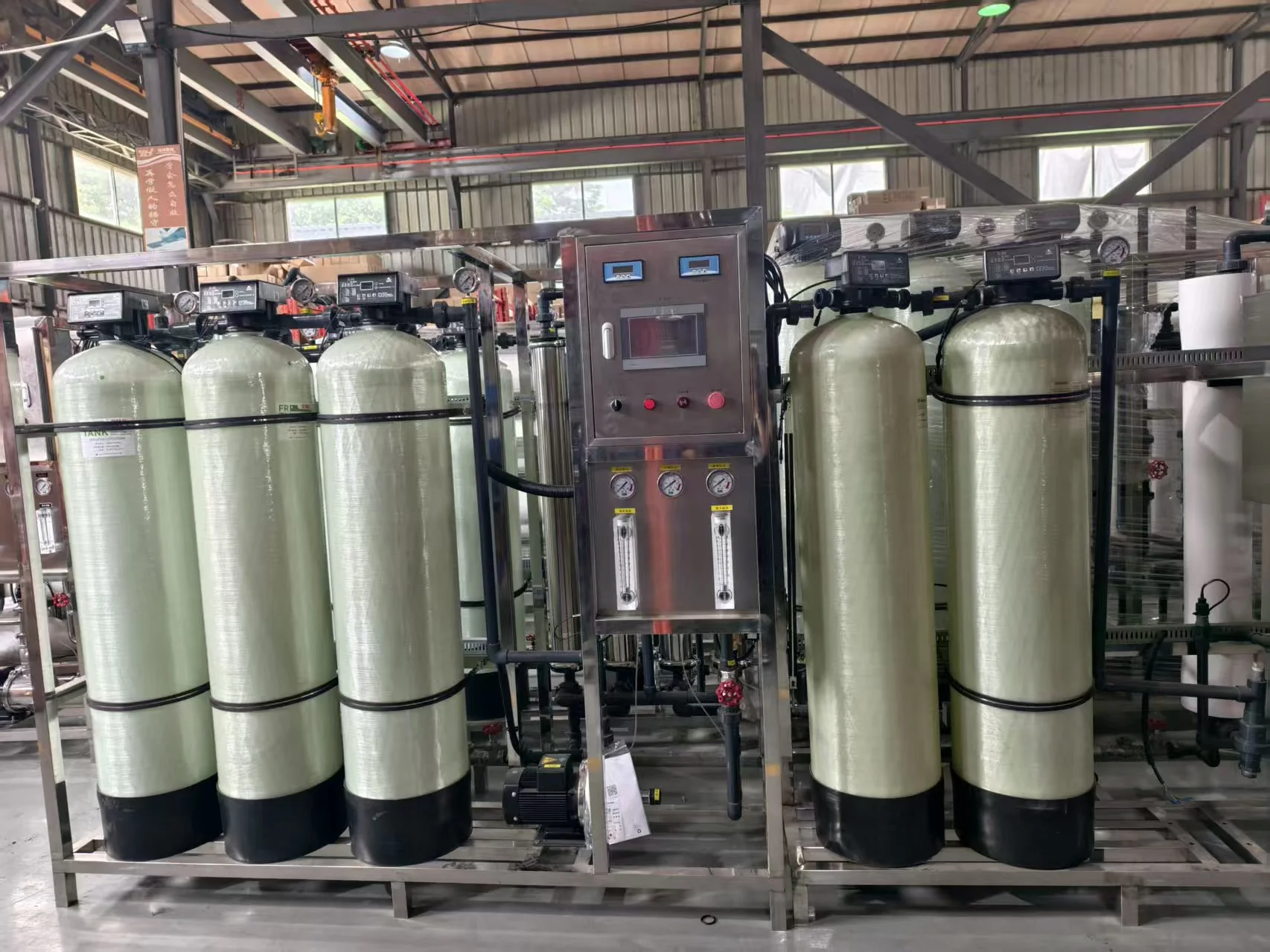
Which pretreatment stages should be specified before BWRO?
The source report decides the train. Avoid a fixed drawing presented as suitable for every borehole.
| Confirmed condition | Stage to evaluate | Design question to resolve |
|---|---|---|
| Suspended solids or changing turbidity | Media filtration, clarification or UF, followed by cartridge protection | What loading and backwash frequency will the site see? |
| Iron or manganese | Controlled oxidation and filtration, or another engineered approach | What are the dissolved and oxidized forms at the RO inlet? |
| Hardness and scaling potential | Softening, antiscalant or a revised recovery design | What does the full ion analysis and membrane projection allow? |
| Chlorine or other oxidants upstream of a polyamide membrane | Dechlorination, often with a verified carbon or chemical stage | How will oxidant removal be monitored before RO? |
| Bacterial or organic fouling risk | Source management and fit-for-purpose pretreatment | How will cleaning and monitoring be planned? |
The 1,000 LPH Egypt brackish-well RO project design provides a concrete example: its proposal specified sand filtration, activated carbon, automatic softening, 5 µm cartridge filtration, single-pass BWRO, storage and final UV treatment. The design basis included conductivity up to 5,000 µS/cm and hardness up to 800 mg/L as CaCO₃, with a proposed recovery of 60–65%. These are proposal specifications for that project, not measured operating results or a universal KONCHE configuration. A different well may need a different train.
Why is the highest possible RO recovery not always the right choice?
Higher recovery reduces the volume of concentrate for a given product flow, but it also raises salt concentration on the membrane concentrate side. That can increase scaling or fouling risk and may require a different membrane arrangement or pretreatment. The practical recovery is set through water chemistry, membrane projection, source-water variation and an acceptable cleaning regime. The DuPont FilmTec manual treats recovery and pretreatment as related design decisions.
Ask for the proposed product, feed and concentrate flows at the stated design temperature and water analysis. Also identify where concentrate will go. Local discharge permission, sewer acceptance, evaporation or another route depends on the destination and must be resolved for the actual site; this article does not prescribe one route globally.
What should a BWRO equipment quotation include?
An EPC comparison is easier when each supplier responds to the same design basis:
- A dated laboratory analysis, source variation and sustained well yield.
- Product-water specification for every use point, plus daily and peak demand.
- Operating hours, outage reserve, storage and duty/standby expectations.
- Pretreatment stages, the design condition that triggers each stage and monitoring points.
- Proposed product, feed and concentrate flow; recovery and membrane-projection assumptions.
- Temperature and power basis, pump and membrane arrangement, controls and instrument scope.
- Concentrate route, backwash and cleaning wastes, installation interfaces and exclusions.
- Acceptance tests, consumables, spare parts, documentation and commissioning scope.
The single- and double-stage RO product range shows the equipment family; a project quotation should still be tailored to the well and final use. To review similar published projects, visit the KONCHE case library.
Frequently asked questions about salty well-water RO
Does a softener lower the TDS of salty well water?
No. Conventional softening exchanges calcium and magnesium for other ions; it is used to control hardness, not to remove the bulk dissolved salts that make a well brackish.
Can one RO plant switch between a well and municipal water?
It may be possible, but both sources need analyses and the controls must account for different chemistry, pressure and pretreatment requirements. Include the two-source duty in the design brief before selecting the membrane system.
Is 1,000 LPH enough for a 12 m³/day project?
At a nominal 1.0 m³/h of treated water, the arithmetic gives 12 m³ in 12 operating hours. That alone does not prove suitability: peak consumption, downtime, low-temperature performance, storage, fouling allowance and the actual water analysis still require engineering review.
Will RO solve an iron or sulfur smell problem?
Not by itself. These problems require their own source diagnosis and often upstream treatment to protect RO. See the sulfur smell in well water guide and test the water before selecting equipment.
Can BWRO product water be used as drinking water?
It can form part of a potable-water treatment scheme, but chemical desalination alone does not establish drinking-water safety. Specify the applicable local standard, conditioning, microbial control, hygienic storage and verification at the delivery point.
What is the first document to send for a BWRO quote?
Send the complete recent laboratory analysis, followed by the well yield, target water quality, hourly and daily demand, operating schedule, site power and concentrate-disposal information. If the report is incomplete, the equipment supplier should identify missing measurements before quoting a performance target.
Request a brackish-well RO configuration review
Send KONCHE the well-water analysis, required treated-water quality, daily demand, planned operating hours, sustained well yield and site constraints. We can review the pretreatment, RO and storage scope and prepare a project-specific technical proposal.