Why Does Well Water Leave Orange Stains? Choosing an Iron and Manganese Filter
Iron and manganese are removed from well water by oxidizing their dissolved forms into particles and then filtering those particles out. Choosing an iron
Iron and manganese are removed from well water by oxidizing their dissolved forms into particles and then filtering those particles out. Choosing an iron filter for well water therefore means matching the equipment route — aeration, chemical oxidation, or catalytic media followed by filtration — to concentration, pH, flow, and competing contaminants. Iron commonly causes orange staining and a metallic taste; manganese can cause black specks, gray staining, or a bitter taste and may require stronger oxidation conditions. For farms, communities, resorts, and food plants, the acceptance test agreed before ordering is what makes the performance guarantee measurable.
Get an Equipment Quote ↗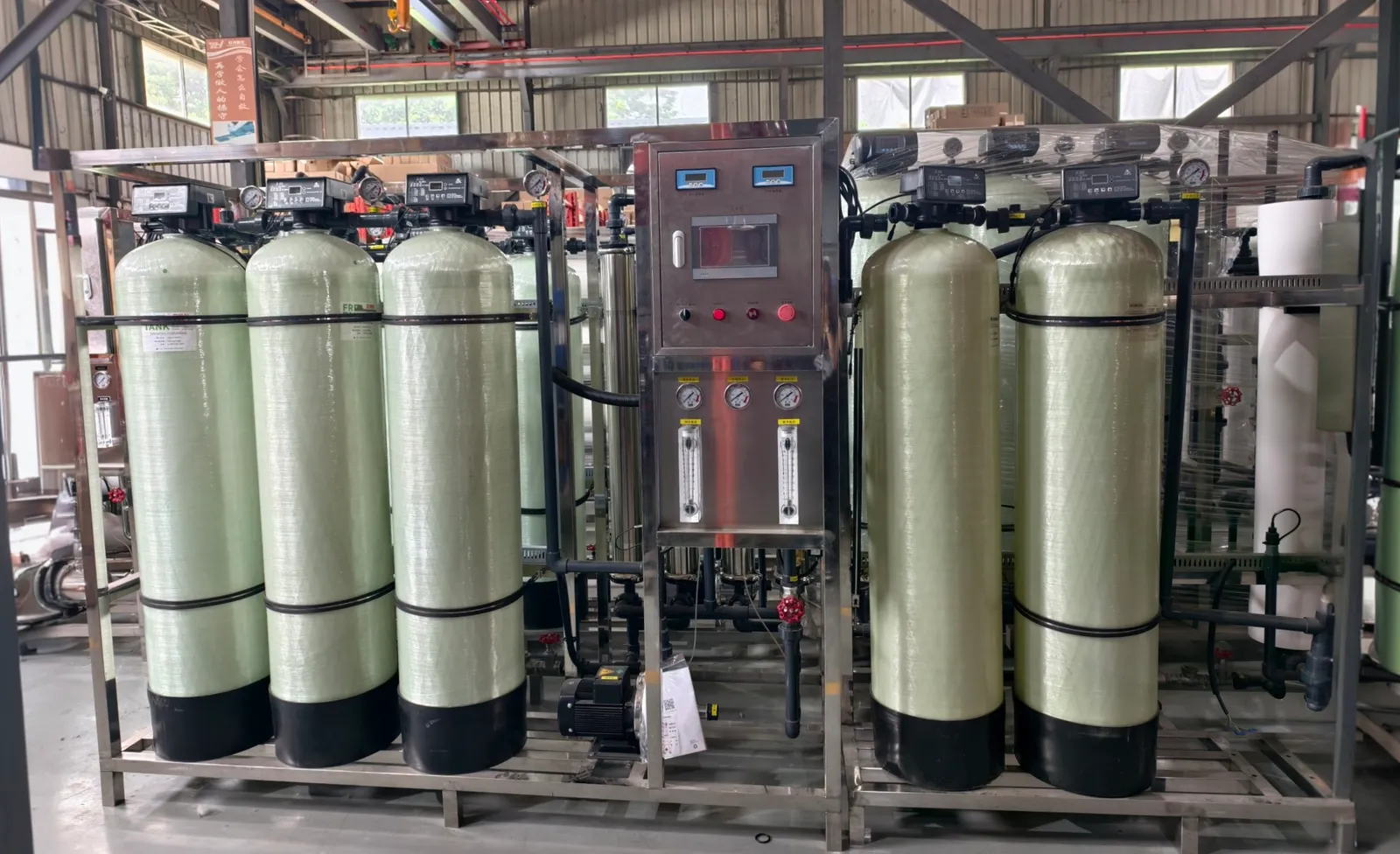
Why Does Well Water Leave Orange Stains? Choosing an Iron and Manganese Filter
Iron and manganese are removed from well water by oxidizing their dissolved forms into particles and then filtering those particles out. Choosing an iron filter for well water therefore means matching the equipment route — aeration, chemical oxidation, or catalytic media followed by filtration — to concentration, pH, flow, and competing contaminants. Iron commonly causes orange staining and a metallic taste; manganese can cause black specks, gray staining, or a bitter taste and may require stronger oxidation conditions. For farms, communities, resorts, and food plants, the acceptance test agreed before ordering is what makes the performance guarantee measurable.
On this page
- Why does well water leave orange, brown, or black stains?
- The treatment sequence that works
- Choosing the oxidation method: the three-way comparison
- Sizing for commercial duty: flow, not just volume
- The acceptance test that makes guarantees real
- Common failure modes (and what they teach)
- Frequently asked questions
Related: UV systems · ozone water treatment guide · well water treatment-system guide · brackish RO for salty wells
Why does well water leave orange, brown, or black stains?
The most frequently overlooked distinction in a water report is the form of the iron. Dissolved (ferrous) iron can be invisible in a freshly drawn sample but turns orange on standing; ferric (oxidized) iron is already particulate and may appear as red water at the tap. Dissolved iron needs an oxidation stage before filtration, while ferric iron can proceed directly to appropriately sized filtration. Two related diagnoses complete the picture:
- Iron bacteria — slimy, rusty growths in the well, toilet tanks, and filters; they survive iron removal that doesn't address them and keep re-contaminating downstream (shock chlorination of the well is part of the cure)
- Colloidal / organic-bound iron — passes simple filters; typically needs coagulation or oxidation ahead of filtration
Ask the lab for total and dissolved iron and manganese. A report showing only "total" hides which treatment front-end you need.
The treatment sequence that works
| Stage | Purpose | Technology options |
|---|---|---|
| 1. Well & system sanitation (if iron bacteria) | Kill the slime producers | Shock chlorination per protocol, then re-test |
| 2. Oxidation | Convert dissolved Fe²⁺ and Mn²⁺ to filterable forms | Aeration for iron; chlorine, permanganate, or ozone dosing where needed; dissolved-oxygen-driven catalytic media |
| 3. Filtration | Capture the precipitate | Multi-media, greensand/catalytic media, or dual-purpose oxidizing-filter media |
| 4. Polishing (only if downstream needs it) | Protect RO or process | Cartridge, or let the softener/RO handle residuals |
| 5. Disinfection | Microbiological barrier (water is now clear but not necessarily safe) | UV systems |
Removing metals is not disinfection — clear, good-tasting water can still carry bacteria. Community and food-business systems keep the disinfection stage.
Choosing the oxidation method: the three-way comparison
| Method | Best at | Advantages | Watch-outs |
|---|---|---|---|
| Aeration (air) | Iron, moderate Mn; high flows | No chemicals; cheap to run | Weak for manganese alone; needs correct pH; can introduce bacteria if not designed |
| Catalytic media (e.g., manganese dioxide-based) | Fe + Mn together at low-moderate levels | Single vessel, no chemical dosing, simple | Needs backwash water and adequate oxidant (often air); media replacement cycle |
| Chemical oxidant (chlorine, permanganate, ozone) | High concentrations; Mn-heavy water; iron bacteria | Strong and fast; dosing is tunable | Dosing control, contact time, and (for ozone) equipment scope — see our ozone water treatment guide |
Manganese often drives the process selection because its oxidation is more pH- and oxidant-dependent than iron removal. Catalytic or aerated systems may suit lower concentrations under favorable pH and dissolved-oxygen conditions, while manganese-dominant water can require chemical oxidation and adequate contact time. Use media-manufacturer performance data and bench or pilot testing where the feed sits near a claimed operating boundary.
Sizing for commercial duty: flow, not just volume
Household guides size by bathrooms. Commercial systems size by peak flow (m³/h) and daily volume, because the oxidation and filtration stages must complete their work at your real flow rate:
- List every simultaneous draw (irrigation zones, processing hours, filling lines, community taps)
- Add the backwash requirement — media filters need a higher instantaneous flow during backwashing than during service, and inadequate backwash is a leading cause of media failure
- Plan filtration in duty/standby or parallel vessels where downtime is unacceptable (communities, food plants)
Where iron removal precedes a softener or reverse osmosis (RO) unit — a common sequence described in the well water treatment-system guide — the iron stage must be sized conservatively. Iron leaking downstream fouls softener resin and deposits on RO membranes. The same protective logic applies ahead of brackish RO for salty wells. Begin with the broader well water treatment guide and confirm the source analysis using the well water testing guide.
The acceptance test that makes guarantees real
Before ordering, agree in writing what "working" means and how it will be measured at commissioning:
| Test point | Pass criterion (typical design) |
|---|---|
| Treated-water iron | Below the standard you specify (often ≤ 0.1–0.3 mg/L) |
| Treated-water manganese | Below the standard you specify (often ≤ 0.05–0.1 mg/L) |
| Turbidity | Within spec at design flow |
| Backwash function | Restores differential pressure at the demonstrated flow |
Suppliers quoting against your water analysis should state the design concentrations, pH, and flow on the quotation itself. KONCHE has manufactured commercial water-treatment systems since 1997 and offers equipment in the 0.25–50 m³/h range. A price with no stated design basis cannot be validated at commissioning.
Common failure modes (and what they teach)
Iron-and-manganese systems usually fail because oxidation, pH, filtration, backwash, or source-water assumptions no longer match the actual well conditions; the symptom pattern points to the stage that needs correction.
- Orange water after the system: oxidation undersized for peak flow, or pH too low for the chosen method — re-check against the report
- Black specks persist while iron is gone: manganese under-oxidized — needs stronger oxidant or catalytic media rated for Mn
- Pressure decay across filter within days: backwash flow inadequate, or iron bacteria coating the media — sanitize the well, fix the backwash
- Great at commissioning, failing by month six: the well changed (season, new nearby pumping) — re-test; treatment designed to a snapshot ages with the aquifer
Frequently asked questions
Will a water softener remove iron?
Partially — softener resin captures small amounts of iron, but using a softener as the primary iron removal stage fouls the resin. Remove iron first, soften second.
Can we combine iron removal with our existing RO?
Yes — as the pre-treatment stage protecting the membranes; iron is lethal to RO performance. Our SWRO vs BWRO guide explains what RO needs protected upstream.
How much backwash water does a media filter use?
A practical planning figure is a few percent of throughput; the exact rate is a design output. Account for it in your water balance — commercial sites sometimes reuse it for irrigation.
Do iron and manganese affect irrigation?
Yes — emitter clogging and crop staining; drip systems in particular need low iron. Livestock tolerances differ from drip specs; match the treatment target to the use.
Where does sulfur smell fit?
Hydrogen sulfide often co-occurs with iron or iron bacteria, but it requires a separate diagnosis-first treatment plan; see sulfur smell in well water. Where ozone is selected as the oxidant, the ozone-generator buying guide explains the sizing inputs.
Why is my well water yellow or brown even before it reaches a tank?
The color may come from oxidized iron, fine sediment, natural organic matter, or a combination. Test dissolved and total iron, manganese, turbidity, pH, and color before choosing media; visual appearance alone cannot identify the correct treatment stage.
Recommended systems for this application
Systems commonly specified for the duties discussed in this guide:
0.25–50 m³/h drinking-water production with multi-stage pretreatment.
View specifications ↗CONTAINERIZEDContainerized Water Treatment SystemComplete treatment trains factory-built and wet-tested inside ISO freight containers.
View specifications ↗CONSUMABLESWater Treatment ConsumablesCartridges, filter media and spares for commercial treatment plants.
View specifications ↗Start with
your water report.
Send total and dissolved iron and manganese results with pH and peak flow. KONCHE selects the oxidation route, media and acceptance criteria.